Introduction: The New Era of Farmer Welfare in Telangana
The Rythu Bharosa scheme represents a transformative shift in the agricultural landscape of Telangana, established as a definitive cornerstone of the Congress government’s “Six Guarantees”. Driven by a core philosophy that seeks to restore the dignity of the farming community, the programme moves beyond mere survival to promote agriculture as a lucrative and sustainable source of livelihood. Chief Minister A. Revanth Reddy has articulated a vision of making farmers the “kings” of the state, ensuring that the primary producers of the nation’s food security are themselves financially secure.
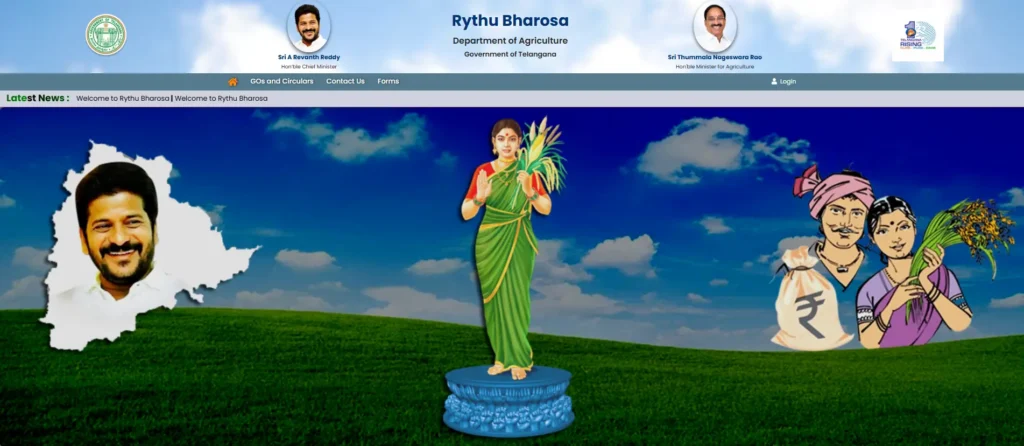
By providing timely investment support, the government aims to break the cycle of rural indebtedness that has historically constrained the sector. This initiative is not merely a financial subsidy but a strategic intervention designed to instil confidence in growers and enhance productivity. As the state transitions into this new era of welfare, Rythu Bharosa serves as the primary legislative and financial engine driving the “Telangana Rising” agenda, ensuring that agrarian prosperity is shared by those working the land.
What is the Rythu Bharosa Scheme?
The Rythu Bharosa scheme is the flagship investment support programme of the Telangana government. It has evolved from the previous “Rythu Bandhu” programme, introducing enhanced financial benefits and significantly stricter eligibility targeting to ensure public funds reach active cultivators rather than speculators.
- Financial Assistance: The scheme provides an annual financial assistance of ₹12,000 per acre. This is distributed in two equal instalments of ₹6,000 per season (Kharif and Rabi).
- Official Launch: The programme was officially launched on 26 January 2025, replacing the previous administration’s provision of ₹10,000 per acre.
- Budgetary Commitment: During the 2026 Ugadi celebrations, Chief Minister Revanth Reddy revealed that the state government has already spent ₹18,000 crore on Rythu Bharosa. For the 2025–26 financial year, the budget allocation remains a substantial ₹18,000 crore to cover both cropping seasons.
- Core Objective: Unlike its predecessor, Rythu Bharosa focuses exclusively on cultivable agricultural land, a policy shift designed to stop the “misuse” of public funds on real estate ventures and fallow plots.
Rythu Bharosa Scheme – Complete Details
| Section | Details |
|---|---|
| Scheme Name | Rythu Bharosa Scheme |
| Launched By | Telangana Government |
| Launch Date | 26-01-2025 (Republic Day) |
| Objective | To provide additional financial support to farmers and stabilize their income |
| Scheme Type | Financial Assistance Scheme |
| Central Scheme Reference | Pradhan Mantri Kisan Samman Nidhi Yojana (₹6,000/year) |
| Implementing Authority | District Magistrate of Concerned District |
| Application Mode | Online & Offline |
| Where to Apply | Praja Palana Centre (Online) / Gram Sabha or Panchayat Office (Offline) |
Latest Updates: March 2026 Disbursement Schedule and Revamped Payouts
To address the long delays experienced in previous years, the government has introduced a “revamped” payout method for the 2026 disbursement. This staggered approach is a strategic response to the state’s tenuous financial position, ensuring fiscal stability while providing immediate relief to the largest number of farmers.
The Launch Event
Chief Minister Revanth Reddy is scheduled to launch the 2026 disbursement on 22 March 2026 at a high-profile event in Narmetta village, Siddipet district. This location is significant as the government seeks to reset its rural image in this key agricultural belt.
The 2026 Three-Step Disbursement Timeline
The new system ensures that all 70 lakh eligible farmers receive the payment for their first acre simultaneously:
- 22 March 2026: The first tranche of ₹3,590 crore will be released. This covers the first acre (₹6,000) for every eligible farmer at once, regardless of their total landholding size.
- Mid-April 2026: The second tranche is estimated to follow approximately 20 days after the initial release, extending payments to farmers with mid-sized holdings.
- End of April 2026: The final tranche will be completed, covering the remaining acreage for farmers with larger landholdings.
Comprehensive Eligibility Criteria
To ensure that investment support reaches the intended beneficiaries, the government has established specific requirements for the 2026 cycle:
- Residency: The applicant must be a permanent resident of Telangana.
- Land Type: Assistance is strictly for cultivable agricultural land. Non-cultivable plots are ineligible.
- Registration: All lands must be registered under the Bhu Bharati portal (the revamped revenue system that replaced Dharani).
- Pattadar Status: Beneficiaries must be registered Pattadars or holders under the ROFR (Recognition of Forest Rights Act).
- Category: The scheme targets small and marginal farmers and agricultural labourers who own cultivable land.
Strict Exclusion Rules: Preventing Scheme Misuse
The government has implemented rigorous guidelines to prevent the waste of public money on non-agricultural land. This “cultivable only” restriction is the “red thread” of the new policy.
Ineligible Land Categories
The following are strictly excluded from Rythu Bharosa:
- Real estate layouts and ventures.
- Mining lands and lands used for industrial purposes.
- Lands occupied by warehouses or function halls.
- Lands acquired for government projects, canals, or development.
- Non-cultivable land: Any land not actively used for farming is excluded based on joint field surveys.
Support for Tenant Farmers and Landless Labourers
While landless agricultural labourers and tenant farmers are no longer covered under the primary Rythu Bharosa scheme, they are eligible for ₹12,000 annually under the Indiramma Atmiya Bharosa scheme.
- Eligibility Identification: Beneficiaries are identified using MGNREGS job card data.
- Critical Requirement: To qualify, a family member must have worked at least 20 days in the 2023–24 financial year under the MGNREGS programme.
Comparison Table: Rythu Bharosa vs. Rythu Bandhu vs. PM-KISAN
| Feature | Rythu Bharosa (Current) | Rythu Bandhu (Previous) | PM-KISAN (Central) |
| Annual Amount | ₹12,000 per acre | ₹10,000 per acre | ₹6,000 per family |
| Instalments | 2 (₹6,000 each) | 2 (₹5,000 each) | 3 (₹2,000 each) |
| Land Limit | No limit (Cultivable only*) | No limit | For landholding families |
| Tenant Support | Via Indiramma Atmiya Bharosa | Excluded | Excluded |
*Note: The “Cultivable Only” restriction is the primary differentiator from Rythu Bandhu, which was criticized for paying out on non-cultivable real estate and mining lands.
Step-by-Step Guide: How to Apply for Rythu Bharosa in 2026
New applicants—specifically those who obtained their pattadar passbooks by February 2026—must follow this administrative process:
Application Channels
- Offline: Submit the completed application form at your local Gram Sabha, Gram Panchayat, or Municipal Corporation office.
- Online/Service Centres: Visit the nearest Praja Palana Centre or Common Service Centre (CSC).
The Verification Workflow (L1, L2, L3)
Applications are processed through a rigorous three-stage administrative workflow to ensure zero misuse:
- L1 Stage (Revenue & Irrigation): A joint survey is conducted by the Agriculture Extension Officer (AEO) and Revenue Inspector. They verify land titles and ensure the plot is not on government land or within water body buffers (FTL zones).
- L2 Stage (Technical Scrutiny): Town planning and agricultural staff verify layout patterns, cultivable status, and road widths where applicable.
- L3 Stage (Final Approval): Once L1 and L2 are cleared, the District Collector or Municipal Commissioner grants final approval after verifying all bank and Aadhaar details.
How to Check Rythu Bharosa Payment Status
Beneficiaries can track their funds and verify records through the following official channels:
- Official Website: Visit rythubharosa.telangana.gov.in to check individual application and payment status.
- Direct Benefit Transfer (DBT): Payments are processed via the RBI’s DBT system, ensuring money reaches the Aadhaar-linked bank account directly.
- Land Record Verification: Access the Bhu Bharati portal to ensure your land is correctly classified as cultivable. If your land is wrongly marked, you must request a joint survey from the Revenue department.
Additional Farmer Support: Loan Waivers and Insurance
The Telangana government provides secondary welfare benefits to provide a holistic safety net:
- Crop Loan Waiver: A waiver of up to ₹2 lakh per farmer has been initiated for short-term agricultural loans taken between 12 December 2018 and 9 December 2023. This is overseen by a sub-committee including Deputy CM Mallu Bhatti Vikramarka.
- Rythu Bima: A Group Life Insurance Scheme providing ₹5 lakhs to the nominee of a registered farmer (aged 18–59) within 10 days of death. The state government pays the entire premium to the LIC.
Technical Analysis: Challenges in Telangana’s Agriculture
Investment support is critical due to structural constraints identified by policy analysts:
- Fragmented Landholdings: Approximately 68% of landholdings in Telangana are marginal (less than 1 hectare), limiting mechanisation and economies of scale.
- Irrigation Dependence: Roughly 37% of cultivable land remains rain-fed, making farmers vulnerable to erratic monsoons.
- The Global Yield Gap: Indian Paddy yields average 4,229 kg/ha, significantly lower than China’s 7,076 kg/ha. Rythu Bharosa provides the necessary capital to bridge this gap through better seed and fertiliser management.
Future Outlook: Technology and “Telangana Rising”
The government is leveraging global partnerships to modernise the sector. During the World Economic Forum (WEF) 2026 in Davos, the “Telangana Rising” delegation discussed a partnership with Google.
- AI-Driven Solutions: The collaboration aims to use AI for monitoring soil health and addressing climate change impacts.
- Regional Framework: The CURE, PURE, RARE (Core Urban, Peri-Urban, and Rural Agriculture Region) framework is being used to ensure agricultural zones are integrated into the state’s broader economic growth.
Conclusion: Action Steps for Farmers
The March 22 rollout is a critical window for the state’s 70 lakh farmers. To ensure your benefits are processed without delay, complete the following Checklist for Success:
- Verify Bhu Bharati Status: Ensure your land is registered and correctly classified as “cultivable.”
- eKYC Completion: Verify that your Aadhar and mobile number are linked to your bank account.
- Visit Local Centres: New applicants with passbooks issued by February 2026 should visit their local Agriculture Extension Officer immediately.
Frequently Asked Questions (FAQs)
Can I get both PM-KISAN and Rythu Bharosa?
Yes. Eligible farmers can receive the ₹6,000 from the Central Government’s PM-KISAN scheme in addition to the ₹12,000 per acre from the State’s Rythu Bharosa.
What happens if my land is marked non-cultivable?
Under the 2026 guidelines, non-cultivable land is strictly excluded. If you believe this is an error, you must request a joint survey through the Bhu Bharati grievance cell or the District Collector’s office.
How do I update my mobile number for DBT alerts?
Visit your local Tahsildar office or a Praja Palana centre to link your current mobile number to your Aadhaar and bank account.
Is the ₹2 lakh loan waiver separate from Rythu Bharosa?
Yes. The loan waiver is a one-time initiative for debts incurred between 2018 and 2023, while Rythu Bharosa is an ongoing annual investment support programme.
What is the Indiramma Atmiya Bharosa scheme?
This is the support scheme for landless labourers. It provides ₹12,000 annually to those who have worked at least 20 days under MGNREGS in the 2023–24 period.